
Sustainable branded merchandise options should make your brand look more consistent, not more self congratulatory
If your company talks about responsible sourcing, lower waste, or thoughtful consumption, your merch has to keep up. People notice when the message on your careers page says one thing and the welcome kit says another.
That’s why the best sustainable branded merchandise options are not just “better materials.” They’re products that fit your brand, get used often, and avoid the cheap giveaway feeling that makes people quietly roll their eyes. Especially employees. They see more of your merch than anyone else, and they’re very good at spotting the gap between stated values and actual choices.
Marketing teams usually don’t need a lecture on sustainability. They need a practical filter for deciding what to buy, what to skip, and how to make branded merchandise feel aligned with the brand people experience everywhere else.
A useful starting point is to treat merch like any other brand touchpoint. The same care you’d apply to packaging, ad creative, or event design should show up here too. If you want more ideas on brand consistency, the team at Avail’s blog writes about this often.
What counts as sustainable branded merchandise options?
Sustainable branded merchandise options are items designed, sourced, and decorated with less waste, better materials, and a stronger chance of long term use. The key phrase there is long term use.
A recycled notebook that nobody opens is not a better brand decision than a standard notebook someone uses every day for six months. Material claims matter, but use matters too. So does durability, repairability, refillability, and how likely the item is to stay on someone’s desk, in their bag, or in their kitchen.
For marketing teams, the easiest way to think about it is this: good merchandise earns its place. It doesn’t need to be flashy. It needs to feel intentional.
That often points you toward categories like drinkware people actually carry, apparel with better fabric quality, bags with a real use case, desk items that replace disposable versions, and packaging that doesn’t turn the unboxing into a pile of trash. It also means being more careful with novelty items, oversized bundles, and products that exist mainly because they were easy to print a logo on.
If you’re building standards for your team, a brand guide for merchandise helps. This style guide approach is a good example of how visual choices and product choices can support each other.
Why do employees care so much about sustainable swag?
Employees care because swag is one of the clearest physical signals of how seriously a company takes its own values. Internal audiences read these signals fast.
An employee can forgive a rushed social post. They’re less forgiving about a box of branded stuff that feels cheap, wasteful, or obviously bought in bulk without much thought. It lands right in their home or at their desk. They touch it. They live with it. If it feels disposable, your brand does too for a moment.
This matters most in onboarding, company milestones, team offsites, recruiting events, and holiday gifting. Those are moments where the product is doing more than carrying a logo. It’s saying something about taste, priorities, and standards.
There’s also a trust issue buried in here. When a company talks publicly about responsibility but sends low quality plastic items that break in a week, it creates friction. Not outrage, usually. Just a quiet little credibility leak.
And those leaks add up. Marketing may not own every culture signal, but branded merchandise absolutely contributes to one. A thoughtful item can make employees feel seen. A throwaway item makes them feel processed.
Which products are usually better choices?
The best options are useful, durable, and simple enough to fit into daily life. Good sustainable branded merchandise options tend to be the items people keep without needing to be convinced.
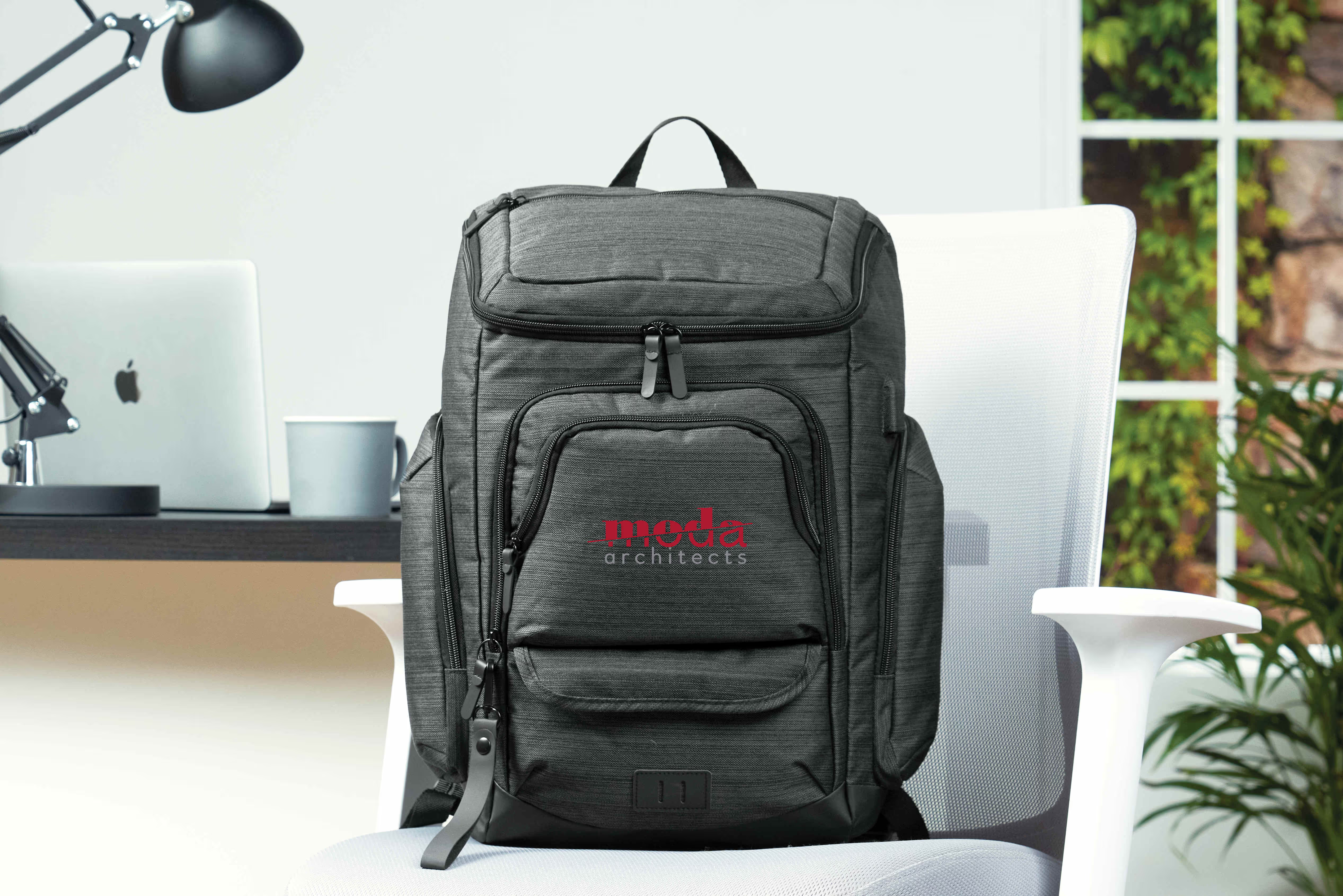
Drinkware is one of the safest categories when the quality is there. A well made bottle, tumbler, or travel mug replaces repeat purchases of lower value items and gets real visibility. Bags can work just as well if the size, shape, and material make sense for commuting, travel, or everyday errands.
Apparel can be strong too, but only when you’re serious about fit, fabric, and decoration. A soft tee or sweatshirt in a style people would wear without the logo has a much better chance than a bargain bin garment in a loud brand color. Good merch should feel like something a person chose, not something they ended up with.
Desk and home items deserve a more skeptical eye. A refillable pen can be smart. A random desktop gadget usually is not. Not every category needs a “green” version. Some categories should simply disappear from your program.
Packaging is part of the product choice too. If an item arrives wrapped in layers of filler, plastic sleeves, and oversized boxes, the final impression is hard to rescue. Cleaner presentation often feels more premium anyway.
If your team wants a material specific read, these are helpful primers on sustainable cotton and smarter plastic choices.
What should marketing teams stop buying first?
Start by cutting the items people keep out of guilt instead of desire. That’s usually where the waste is hiding.
Low quality trinkets, tiny desk toys, flimsy tech accessories, and one event only products are common culprits. They seem harmless because each unit is cheap, but they create a larger brand problem. The recipient instantly understands that cost and convenience won the argument.
Another category to question is “stuff for the sake of fullness.” A five item box is not better than a two item box if three items are filler. Bigger kits can look generous at first glance, but they often create more waste and a weaker memory. One excellent piece plus a useful supporting item usually lands better.
Over branding is another thing to dial back. If the logo treatment makes the item harder to wear, carry, or display, people won’t use it. Subtle branding often leads to more impressions because the product stays in circulation longer.
There’s a broader lesson here. Sustainable merch is often less about finding saintly products and more about making fewer lazy choices. Marketing teams already know how to edit. Apply that instinct here.
How do you choose sustainable branded merchandise without turning it into a research project?
Use a short decision filter and stick to it. You do not need a 40 point scoring model to make better choices.
Ask five practical questions. Will the recipient use it weekly? Does the product feel like our brand? Is the quality good enough to last? Are the materials or packaging meaningfully better than the obvious cheap version? Would we still choose this item if there were no sustainability claim attached?
That last question is sneaky and useful. It keeps teams from picking products just because the label sounds responsible. If the item is ugly, flimsy, awkward, or off brand, a nice material story won’t save it.
It also helps to match the product to the moment. Onboarding kits should favor daily use and longevity. Event giveaways should be simple, packable, and genuinely handy. Client gifts can be more elevated, but they still need a reason to exist beyond looking expensive for five minutes.
If you run a lot of programs, build a short approved assortment so people are not starting from zero every time. A tighter catalog usually leads to better quality control and fewer impulse buys. That matters even more when multiple teams are ordering merchandise across the company.
How can sustainable merch still feel creative and on brand?
It feels creative when the idea starts with the audience, not with a recycled material claim. The strongest programs use restraint, taste, and context.
Say your brand is minimal and premium. Then a clean ceramic mug, a heavyweight notebook with subtle decoration, or a well made tote in a neutral color probably says more than a loud “eco” item covered in messaging about how responsible it is. If your brand is warmer and more playful, you can still make thoughtful choices through color, copy, and packaging without turning the product into a sermon.
Creativity also shows up in curation. Pairing fewer, better items around a clear use case makes the whole experience feel intentional. A commute kit, a work from anywhere set, or a new hire box built around day one usefulness will always beat a pile of unrelated objects with the same logo stamped on each one.
One more thing: don’t make sustainability the only story. People want products that are nice to receive. If an item is practical, attractive, and built with more care, the value comes through without a speech attached. That’s usually the sweet spot.
If this got you thinking about your own swag program, we write about this a lot on the Avail blog.
What does good look like over time?
Good looks consistent. It means your event merch, onboarding kits, employee gifts, and everyday company store items all feel like they came from the same brand brain.
It also means fewer “why did we order this?” moments six months later. The strongest programs get there by treating merchandise as an ongoing brand channel, not a pile of one off purchases made under deadline pressure. They keep a tighter assortment, revisit performance, and retire products that looked fine in a sample but disappointed in real life.
Over time, you’ll usually notice a shift. Teams stop asking for more stuff and start asking for the right stuff. Employees wear the apparel. They carry the bottle. They keep the bag in rotation. That’s the signal you’re after.
And yes, sustainable branded merchandise options can support that outcome. Not because the phrase itself is magical, but because it pushes better questions. Is this useful? Is this well made? Does this reflect who we say we are? Those are brand questions. They just happen to produce smarter merch.
TLDR
- Sustainable branded merchandise options work best when they are useful, durable, and aligned with your brand, not when they simply carry a better materials claim.
- Employees notice the gap between a company’s stated values and the swag it sends, especially in onboarding, appreciation gifts, and internal programs.
- Better choices usually include quality drinkware, wearable apparel, practical bags, and cleaner packaging, while cheap filler items are often the first things to cut.
- Marketing teams can make faster decisions by using a simple filter focused on use, quality, brand fit, and whether the item is worth choosing on its own.
- The goal is not to sound virtuous. The goal is to send merchandise that feels intentional, credible, and consistent with the brand people already know.

%201.avif)