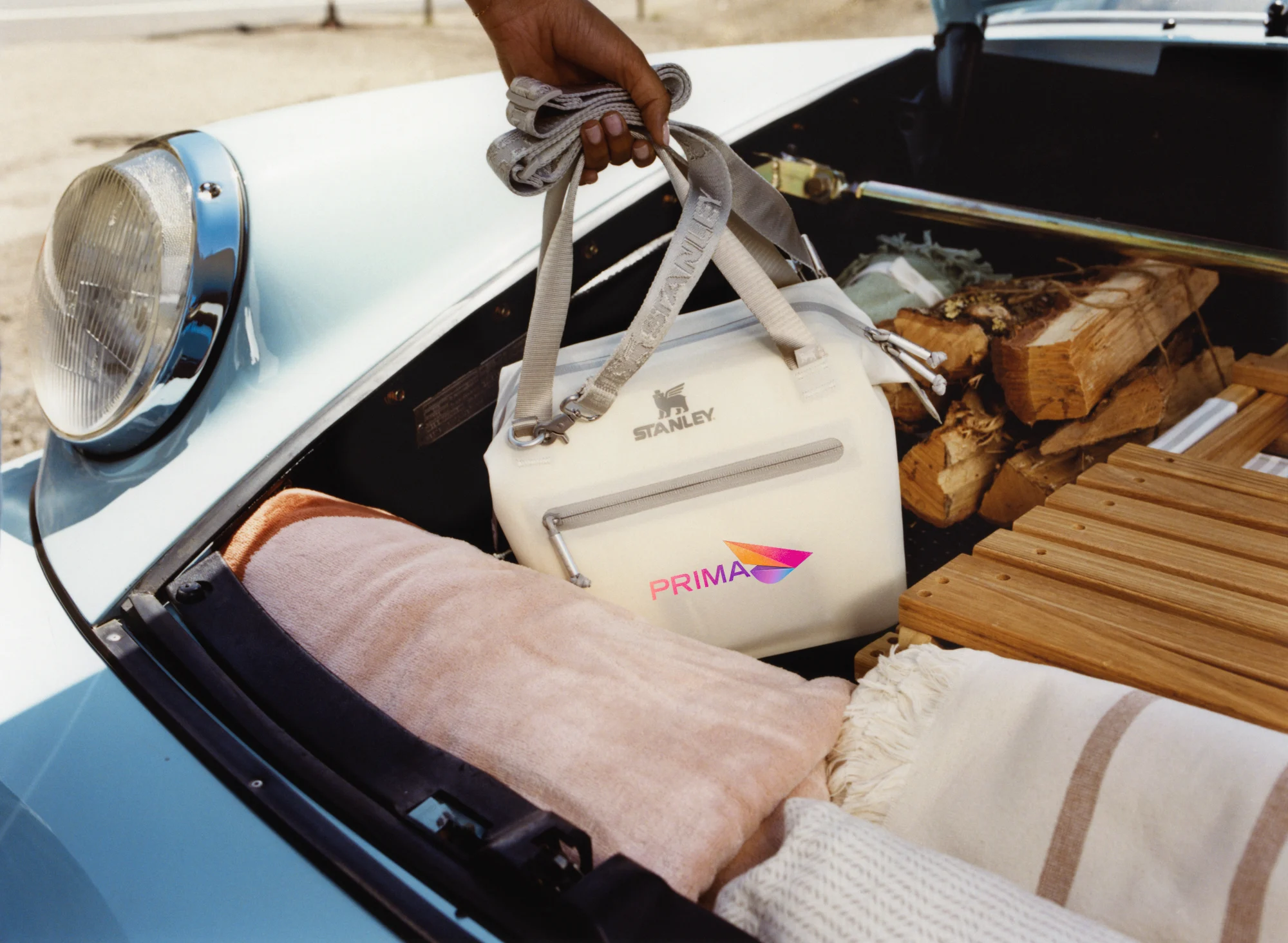

A swag program is the defined system a company uses to plan, buy, approve, store, and distribute branded merchandise. Typically, these purchases are for employees, customers, prospects, event attendees, and other audiences. A clearly defined swag program explains why branded items are used, who they are for, when they are sent or handed out. Less obvious uses cases include outlining what items are approved, who owns the process, how budgets are managed, and how success is measured.
Typical programs start with a few event giveaways, an onboarding box, a customer thank-you gift, or a batch of shirts for a sales kickoff. The work feels manageable until more teams start asking for their own items. Timelines get shorter and the same questions keep coming back: what should we order, who approved that logo, where is the inventory, and why did shipping cost more than the product? Sound familiar?
The problem is that every request creates a new mini-process unless the company has defined the larger one.
What makes a swag program different from ordering branded merchandise?
Ordering branded merchandise is a transaction. A swag program, however, is the operating model around the transaction. The order answers, 'What are we buying?' The program answers, 'Why are we buying it, who is it for, how will it be used, and what happens after it arrives?'
That difference matters because most waste happens outside the item itself. A low-cost notebook can become expensive if it is rush produced or shipped overnight. Even worse, it's stored in three offices, but still reordered because nobody knows how many are left. A higher-quality item can be a better use of budget if recipients actually use it, the quantities are right, and the distribution plan is clear.
A program also gives teams a shared language. Instead of treating every request as a blank slate, you can separate branded merchandise into use cases. Each use case can have different rules because the audience and purpose are different.
For example, an onboarding kit is usually predictable. You know when someone starts, which items should be included, and what impression the kit should create. Event swag is less predictable. Attendance changes, freight deadlines move, and leftover inventory can follow you home. Customer gifts require more care around personalization, timing, and usefulness. Treating all three as the same kind of order is how teams end up with too much of the wrong thing and not enough of what they actually need.
Why does company swag get expensive when the program is undefined?
Swag gets expensive when every team solves the same problem separately. The cost is not only the product. It is the duplicated effort, rushed decisions, extra freight, unused inventory, and brand inconsistency.
The promotional products category is large enough to deserve that kind of discipline. PPAI reported that U.S. distributor promotional product sales reached $27.78 billion in 2025. Companies are already spending real money here. The question is whether that spend is being directed with the same clarity as other brand and employee experience investments.
Undefined programs usually create four kinds of hidden cost.
The first is overbuying. Teams order more than they need because price breaks reward larger quantities, but size curves, office headcount, and audience preferences are often guesses.
The second is under-planning. A request comes in late, production gets compressed, and rush freight eats the budget.
The third is approval sprawl. Logos, colors, messaging, and item quality vary because there is no shared standard for what belongs in the brand.
The fourth is inventory drift. Items are purchased for one moment, then sit until they are obsolete, damaged, or forgotten.
This is why defining a program is not about adding process for its own sake. It is about giving teams enough structure to stop reinventing the work. If you are seeing the same issues across teams, the helpful question is not, 'Who dropped the ball?' It is, 'What decision was never defined?'
Who should a swag program serve inside and outside the company?
A useful swag program starts with audiences, not products. Different audiences need different levels of quality, personalization, timing, and brand presence.
Inside the company, swag often supports employee onboarding, recognition, team milestones, recruiting, internal events, and culture-building moments. These uses are easy to underestimate because they can look like soft benefits. In practice, they create operational work across People, Workplace, Marketing, and Finance. Sometimes even IT or Security when addresses and employee data are involved. A good program makes those handoffs visible before they become last-minute favors.
Outside the company, branded merchandise may support demand generation, customer appreciation, partner programs, conferences, community events, and sales development. The standards should be tighter here because every item carries the brand into someone else's world. As a side note, more branding is not always better. Subtle, useful, and well-timed items often do more for brand integrity than loud logos on products people never choose to use.
Audience clarity also helps teams say no without making it personal. If a request does not match a defined audience, moment, or goal, it can be paused, adjusted, or combined with another initiative. That protects the budget and reduces the number of one-off orders that feel urgent only because no one has defined what counts as urgent.
What decisions should be defined before teams order more swag?
The most useful swag programs define a few decisions before the next urgent request arrives.
The first is ownership. Someone needs to be responsible for standards, budget visibility, vendor coordination, inventory oversight, and intake. That does not mean one person does all the work. It means everyone knows where decisions live.
The second decision is purpose. Each swag use case should have a reason for existing. Employee welcome kits might be designed to create a consistent first-week experience. Customer gifts might be designed to recognize a milestone or strengthen an existing relationship. Without a stated purpose, teams default to whatever item is available, familiar, or fastest.
The third decision is the approved item range. This does not have to be a giant catalog. In many companies, a smaller set of approved items works better because it protects brand standards and concentrates spend. Standard items can cover recurring needs, while special projects can still exist when the audience or moment justifies them. If you are trying to understand how larger organizations bring order to this work, this guide to managing branded merchandise across large companies gives a useful view of the operating layer behind the items.
The fourth decision is fulfillment. Fulfillment is the process of getting the right items to the right people on the right timeline. When fulfillment is not defined early, someone ends up manually collecting addresses, packing boxes, tracking shipments, and explaining delays. For teams trying to reduce that manual work, it helps to understand what organized swag fulfillment for distributed teams can include.
The fifth decision is budget control. A swag program should clarify who can request spend, what budget each use case draws from, and how exceptions are handled. Budget rules are not just finance controls. They help teams make tradeoffs before a rush order forces them into the most expensive path.
How does a clear swag program help teams distribute more effectively?
Clear programs distribute better because they match the item, timing, and delivery method to the actual moment. That sounds obvious, but it is where many programs break down. Teams spend time picking the product and much less time deciding how the recipient will receive it, whether they want it, and what action or feeling the item is supposed to support.
A defined program can include different distribution models for different use cases. Onboarding kits might be triggered by start date. Event inventory might be shipped in bulk to a venue, with a plan for leftovers before the event begins. Customer gifts might be sent only after a specific milestone rather than as a broad, generic campaign.
This is also where restraint becomes part of the program. Some people love branded gear. Others don't. A more thoughtful program can include opt-in choices, less visible branding, donation alternatives, or non-merchandise options when the moment calls for it. The goal is not to send more. The goal is to send what has a real chance of being used, appreciated, or remembered.
Distribution also improves when inventory is visible. If teams can see what exists, they can avoid duplicate orders. They can also make better decisions about whether to reorder, retire an item, or redirect inventory to another audience. Visibility turns swag from a closet problem into a managed business process.
How should teams measure whether a swag program is working?
A swag program should be measured by more than how many items were ordered or distributed. Volume is easy to count, but it can hide waste. A thousand shirts handed out at an event may look successful until half of them are the wrong size, left behind, or never worn. A smaller, more intentional send can be more effective if recipients actually use the item and the moment feels relevant.
Start with measures that match the use case. For onboarding, useful signals might include delivery success, kit completeness, employee feedback, and reduced manual time for the People team. For events, look at inventory accuracy, freight costs, leftover quantities, booth engagement, and whether the items supported follow-up. For sales or customer moments, track whether gifts were tied to the right account stage, whether delivery happened on time, and whether the item supported a specific relationship goal.
Spend should be measured in context. The cheapest product is not always the least expensive choice if it creates waste or reflects poorly on the brand. The most premium item is not always justified if the audience is broad and the moment is low-intent. Better measurement helps teams understand cost per useful outcome, not just cost per unit.
Time is part of the measurement too. If one marketing manager spends hours every week answering swag questions, chasing approvals, checking inventory, and coordinating shipments, that is program cost. Many teams do not see that cost because it lives inside someone's already full job. Naming it makes the case for a cleaner system easier to understand.
What does a well-defined swag program look like in practice?
A well-defined swag program is usually not complicated on paper. Some teams begin by centralizing one use case, such as employee onboarding or events, before they try to organize everything. That can be a practical way to build trust because it solves a visible problem first. If employee kits happen to be your current pain point, this article on centralizing an employee swag program shows what changes when requests, inventory, and distribution stop living in separate threads.
The point is not to make swag feel corporate or rigid. The point is to make the work less dependent on memory, favors, and whoever knows which closet has the medium hoodies. A clear program lets teams move faster because the common decisions have already been made.
If you are still early in organizing this work, start by writing down the audiences, moments, owners, and rules you already have in practice. The gaps will become visible quickly. From there, the next step is not necessarily a bigger catalog or more merchandise. It is a clearer way to decide what should exist in the first place.
Frequently Asked Questions
What is a swag program at a company?
A company swag program is the system for deciding how branded merchandise is planned, purchased, approved, stored, and distributed. It defines the audiences, moments, items, owners, budgets, and success measures for company swag.
Is a swag program the same as a company store?
No. A company store can be one part of a swag program, but the program is broader. The program defines the strategy and rules, while a store is one way employees, teams, or approved audiences may access items.
What should be included in a swag program?
A swag program should include ownership, approved use cases, audience definitions, brand standards, budget rules, item guidelines, fulfillment processes, inventory tracking, and measurement. These pieces help teams make consistent decisions instead of treating every request as a one-off order.
Who usually owns the swag program?
Ownership often sits with Marketing, People, Brand, Workplace, or Operations, depending on the company. The best owner is usually the team with the most responsibility for brand consistency, employee or customer experience, and cross-functional coordination.
How does a swag program reduce waste?
A clear program reduces waste by preventing duplicate orders, overbuying, obsolete inventory, and items that do not match recipient needs. It also helps teams choose better quantities, plan fulfillment earlier, and retire items before they become clutter.
How do you start a swag program from scratch?
Start by listing your current swag use cases, audiences, vendors, inventory locations, recurring requests, and approval steps. Then define which moments matter most, who owns decisions, what items are approved, and how distribution should work for each use case.
How do you know if your swag program is working?
A swag program is working when teams can request and distribute items without confusion, inventory is visible, spend is controlled, and recipients actually use or value what they receive. Useful measures include delivery success, leftover inventory, recipient feedback, budget accuracy, and time saved by internal teams.
%201.avif)