
Why do employee welcome kits feel generic?
Because most of them were assembled from a catalog, not built from your brand. A vendor showed you a long list of products, your team picked a few safe options, and nobody stepped back to ask if the full kit actually felt like your company.
That’s the part marketers notice right away. The box arrives, every item is technically branded, and somehow the whole thing still feels anonymous. The hoodie is fine, the notebook is fine, the mug is fine, but together they don’t say anything clear about who you are.
A welcome kit should do more than place a logo on objects. It should help a new hire feel your tone, your standards, and your point of view in the first week. If it feels like it could have come from any SaaS company, the issue usually isn’t effort. It’s ownership.
Too often, no one owns the experience from start to finish. Purchasing approves spend, HR needs it shipped, marketing glances at the mockup, and the vendor fills the order. The result is a box of acceptable items with no real story.
What actually makes a welcome kit feel specific to your brand?
A brand specific kit feels edited, not accumulated. The best ones have a point of view in the item choices, the packaging, the print methods, and even the order in which things are discovered.
Think about how your brand shows up everywhere else. Your website has a tone. Your campaigns have visual rules. Your event booth has a reason for every material choice. But welcome kits often skip that same scrutiny because branded merchandise gets treated like a purchasing task instead of a brand channel.
That’s why generic kits tend to include the usual suspects. A water bottle, a tee, a notebook, a sticker pack. None of those items are bad on their own. They just become forgettable when there’s no filter behind them.
A stronger kit starts with a few simple questions. What should a new employee feel when they open it? What does your brand never do? What quality bar would make your team proud to send this to an exec, an engineer, or a new manager on day one?
When someone answers those questions early, the kit gets sharper fast. Materials make more sense. Color choices stop drifting. Packaging starts to feel intentional. Even a small kit can feel premium and distinctive when the choices connect.
If you want a useful gut check, compare your current onboarding box to your brand guidelines. If the experience wouldn’t pass the same review as a campaign asset, that’s your answer. We’ve written about consistent on brand swag because this problem shows up far beyond onboarding.
Why does the catalog approach produce bland results?
Because catalogs are built to make selection easy, not to make brands memorable. They’re great at presenting options, but terrible at editing for meaning.
Most distributors begin with access. They have supplier books, promo databases, and product feeds with thousands of SKUs. So the process starts with browsing. You get pages of drinkware, apparel, desk items, tech accessories, and packaging ideas. It feels productive because there are so many choices.
But choice is not curation. A giant product list doesn’t tell you which combination fits your brand voice, your employee audience, or your onboarding moment. It just gives you a safer path to making a decision quickly.
That’s how you end up with kits that look polished in a PDF and flat in real life. Each item was approved one by one, yet no one evaluated the set as a whole. The shirt fabric, print placement, insert card language, box color, and gift note often come from separate conversations. No surprise they don’t land as one cohesive experience.
Marketing teams feel this especially hard because you’re used to reviewing work in context. You don’t approve ad copy without seeing the design. You don’t review packaging without thinking about unboxing. With swag, a lot of vendors still sell in fragments. Item first, experience second.
That process also rewards the safest internal choice. If a marketer is pressed for time, a standard tumbler and a black hoodie are easier to defend than a more tailored mix. Safe choices rarely offend. They also rarely create a memorable first impression.
How does the distributor model make customization weaker?
Customization gets weaker when the person selling the kit isn’t the one controlling production. If your vendor passes artwork, decoration, packaging, and shipping across separate partners, brand intent gets diluted at every handoff.
Here’s what that often looks like in practice. One company sources the products. Another handles embroidery or printing. Someone else packs the kits. A freight partner ships them. Billing may even sit with a different back office team. Every step can be competent, but nobody is really accountable for the final brand experience.
So your team says, “We want this to feel modern, clean, and considered.” By the time that request reaches the people pressing ink, folding inserts, and packing boxes, it has turned into file specs, due dates, and item counts. The emotional part of the brief gets lost.
This is also why kits can look right in mockups and still arrive feeling off. Print size is slightly too large. Garment quality is a little thinner than expected. Box fill feels random. The insert copy sounds like it came from HR, not your brand team. None of these misses are dramatic on their own. Together, they make the whole thing feel generic.
For marketers, this is maddening because it’s the same problem you’d never accept in another channel. You wouldn’t hand your campaign to a stack of disconnected vendors and hope the final output still feels cohesive. Yet branded merchandise often runs exactly that way.
If your welcome kits regularly miss the mark, the issue may not be your taste level or your internal process. It may be that your vendor relationship is optimized for buying products, not producing a branded experience.
What are the signs your welcome kit process is the real problem?
The clearest sign is when every item seems fine, but the box still feels forgettable. Generic kits are usually a process problem long before they’re a product problem.
One sign is that your first meeting is mostly about available items. If the conversation starts with “here are some popular options” instead of “what should this experience communicate,” you’re already drifting toward sameness.
Another sign is that no one asks for your style guide, brand rules, or tone of voice. A logo file is not the same thing as a brand brief. If your vendor only needs artwork files and color codes, they’re probably preparing to decorate products, not shape an onboarding moment. If you have one, your style guide should be part of the process, not an afterthought.
A third sign is too many approvals on isolated pieces. You approve the notebook in one email, the mailer in another, the insert card in another, and never see a true end to end review. That’s how mismatches sneak in.
Watch for vague recommendations, too. “Our clients love this one” can be useful, but it’s not strategy. Popular products are not the same as right products. A welcome kit should reflect your company, not the average taste of a hundred unrelated buyers.
Finally, notice who owns quality control. If the answer is fuzzy, problems tend to show up late. Somebody should be reviewing the complete experience before it ships, including item mix, decoration choices, packaging flow, and messaging. Without that final point of view, generic is the default.
How should marketing teams build welcome kits that don’t feel generic?
Start with the experience, then choose the items. That one shift changes almost everything.
Before anyone sources products, define the role of the kit. Is it meant to signal craftsmanship, warmth, ambition, restraint, creativity, or speed? Pick one or two traits that truly fit your brand. More than that, and the kit starts trying too hard.
Then build an edit, not a pile. A smaller set of better matched products will usually outperform a larger box of unrelated ones. A great notebook with the right finish, a well chosen layer piece, and packaging that carries your voice can do far more than six filler items.
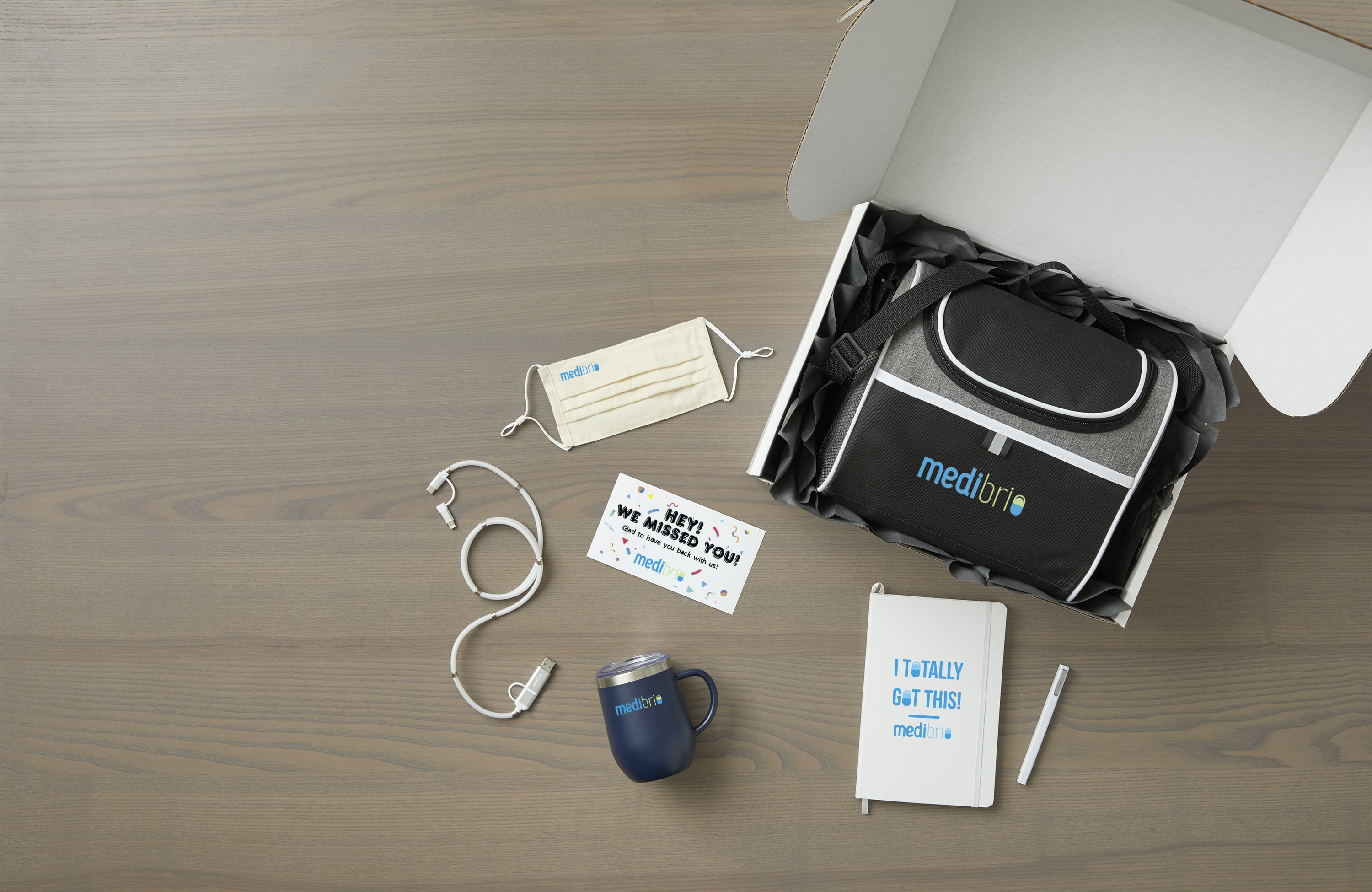
Insist on seeing the full journey before approval. That means the outside of the shipper, the first insert, the product order inside the box, decoration methods, and the language used throughout. Onboarding kits are a brand moment. Review them like one.
It also helps to bring marketing in earlier instead of asking for a late logo check. The best branded merchandise programs work when brand standards shape sourcing from the start. We talk about that approach in running branded merchandise like a brand channel, because that’s really the standard most teams want.
If your company sends kits at any scale, consistency matters just as much as creativity. You need the same quality and presentation across every hire, office, and shipment window. That’s where process and operations matter more than one clever product choice.
This is exactly the kind of problem a swag management platform solves. Here is how Avail approaches it. We combine software and managed service so your team can review branding, kitting, inventory, and fulfillment in one place instead of stitching it together across emails and vendor handoffs. If you’re feeling the pain in onboarding, our pages on kitting and solutions for marketing teams show what that looks like in practice.
Why does this matter so much for employee onboarding?
Because a welcome kit is one of the first physical proofs of your brand. New employees notice the details, and they notice when those details don’t line up.
People form quick impressions from tangible things. The quality of the garment, the wording on the card, the way items are packed, and the usefulness of each piece all send signals about how your company operates. Sloppy kit, sloppy read on the company. Thoughtful kit, thoughtful read on the company.
Marketing leaders sometimes underestimate how visible this is internally. A generic welcome kit doesn’t just disappoint the recipient. It quietly tells recruiters, people teams, and executives that branded merchandise is a low judgment category. Once that perception sets in, it gets harder to argue for better standards later.
On the other hand, a well built onboarding experience earns trust. It shows your brand can stay consistent outside the website and outside paid media. It proves you can turn standards into something real people hold in their hands.
That’s why the fix is not “find trendier products.” The fix is to work with a partner who can connect brand thinking to sourcing, decoration, packaging, and delivery without dropping context between steps. When that connection is missing, generic is what shows up on the doorstep.
TLDR
- Employee welcome kits feel generic when they’re built from catalogs and item approvals instead of a clear brand point of view.
- The usual distributor process often separates sourcing, decoration, packing, and shipping, which causes brand intent to fade during handoffs.
- If no one reviews the full unboxing experience, even decent products can arrive as a forgettable kit.
- Marketing teams get better results by defining the feeling first, editing the item mix tightly, and reviewing the whole experience end to end.
- This is exactly the kind of problem a swag management platform solves, which is why Avail brings branding, kitting, inventory, and fulfillment together.
%201.avif)