
How sales teams use branded merchandise to create pipeline
Sales teams use branded merchandise best when they treat it like a deal tactic, not a courtesy gift. The strongest programs tie each send to a specific sales moment, a clear audience, and a next step.
That matters because random swag rarely changes anything. A hoodie sent because someone seemed nice is just spend. A thoughtful item sent to support meeting creation, stakeholder buy in, deal momentum, or post demo follow through can help a rep stay remembered and give the buyer a reason to reengage.
The key is intent. Branded merchandise works when it supports a sales motion already in progress. It is not there to save a weak pitch, cover for bad targeting, or replace follow up. It gives a good sales process a little more traction.
Used well, it also helps sales teams stand out without sounding louder. Most buyers ignore generic nudges. Fewer ignore a relevant, well timed send that feels human and still professional.
When should sales teams send branded merchandise?
Sales teams should send branded merchandise at high value points in the deal cycle. The best times are before a first meeting, after a strong discovery call, around a multi stakeholder demo, and after a stalled but still active opportunity needs a reason to restart.
Pre meeting sends work when the goal is simple: get attention from the right person and make the meeting feel worth keeping. That might be a useful desk item, a coffee kit, or something tied to the prospect’s role. The item should be modest, thoughtful, and easy to understand. No one needs a mystery box to accept a 30 minute intro.
After discovery, the goal changes. You already have contact, so the send should reinforce what you learned. If the buyer talked about team burnout, remote work, or a packed travel schedule, the item can reflect that context. Relevance matters more than price.
For demos with several decision makers, branded merchandise can help widen engagement. A coordinated send before the meeting gives everyone a shared touchpoint and increases the odds that attendees actually show up. It also gives the seller a natural opener that does not feel scripted.
For stalled deals, a send can reopen the conversation if it is paired with a real point of view. “Checking in” gets ignored. A small package tied to a new insight, a custom note, or a timely business reason to reconnect lands better because it earns the interruption.
What kind of branded merchandise actually works for sales?
The best branded merchandise for sales is useful, easy to ship, and appropriate for the stage of the relationship. Buyers keep items that fit into their day without asking for effort.
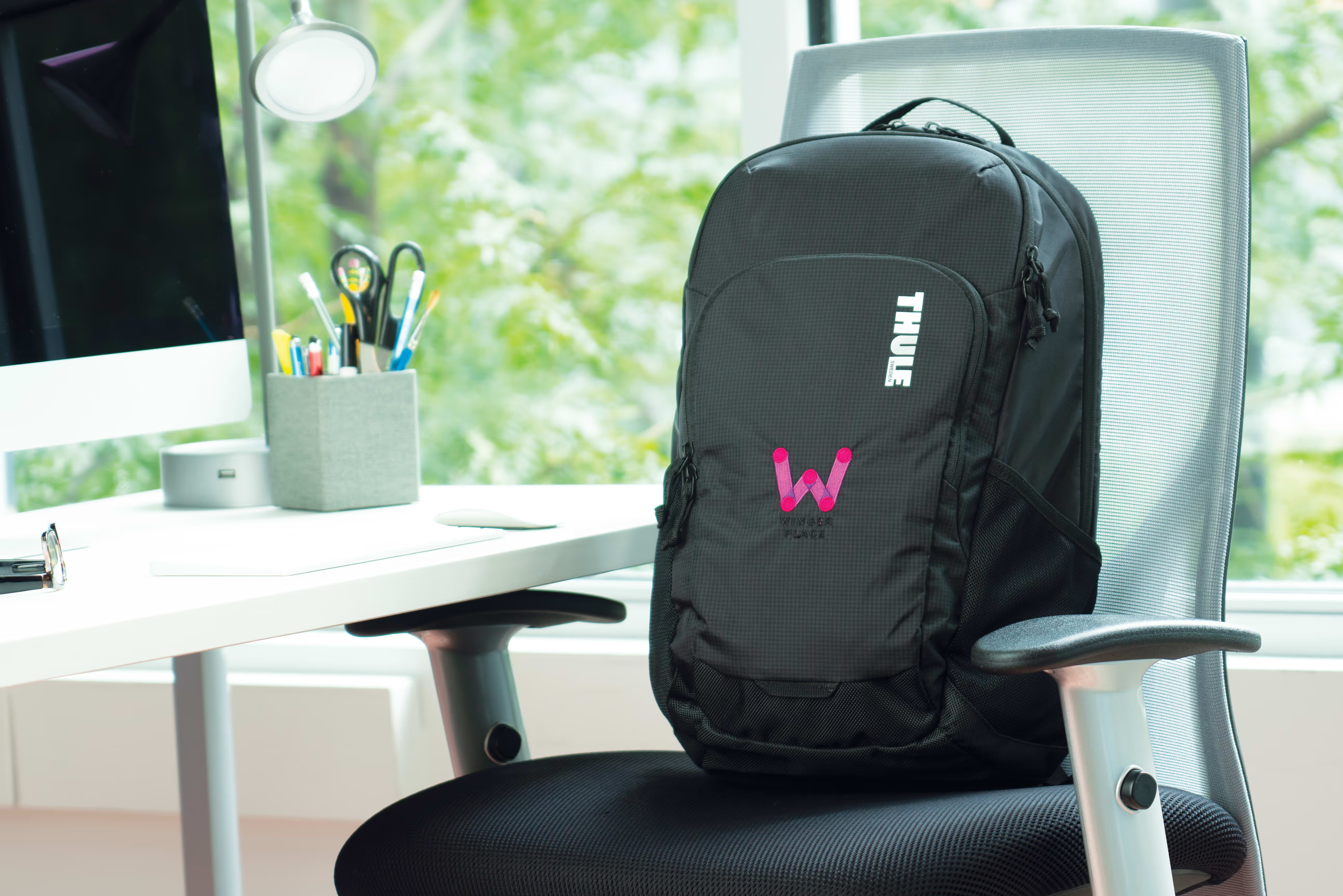
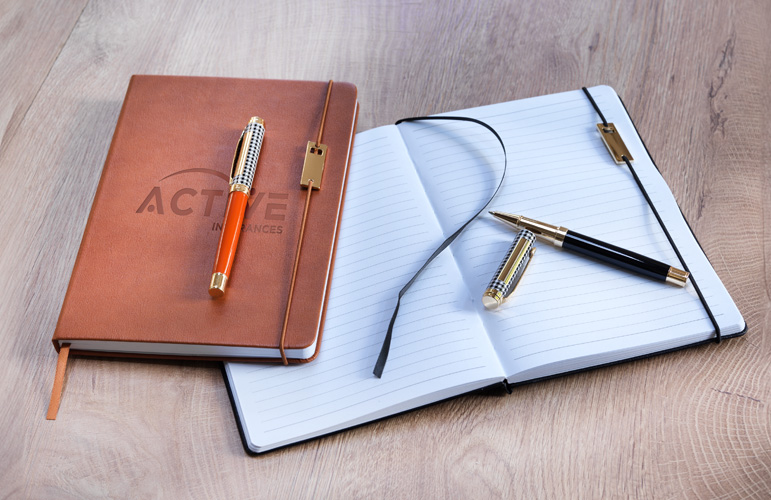
That usually means practical products with subtle branding. Drinkware, notebooks, tech accessories, snacks, and work from home items tend to do well because they get used. Apparel can work too, but sizing adds friction and the brand has to be strong enough that someone would actually wear it.
Good sales swag also matches the temperature of the deal. Early stage outreach should stay light and professional. You are trying to start a conversation, not make the buyer feel awkward. Later stage sends can be more tailored because the relationship already exists.
Cheap novelty items create the wrong kind of memory. So do overly expensive gifts that trigger compliance concerns or make the recipient uncomfortable. A smart send feels considered, not flashy.
One useful test: if the logo disappeared, would the item still be worth keeping? If the answer is no, it is probably not helping your sales team much.
If your team is trying to build a more intentional program, this branded merch program playbook is a helpful place to start. It focuses on planning around business goals instead of ordering products first and asking questions later.
How do sales teams use branded merchandise at each deal stage?
Sales teams use branded merchandise differently at each deal stage because the job changes as the deal moves. One item cannot do all the work, and one sending rule should not apply to every opportunity.
At the top of funnel, merchandise is mainly for pattern interruption. The rep wants to stand out in a crowded inbox and give the prospect a reason to respond. That send should be simple, low friction, and tied to a clear ask.
In active evaluation, the job is to build confidence and keep momentum. A send here can help reinforce professionalism and make the buying group feel seen. For example, a team receiving a practical, well presented kit before a workshop is more likely to treat the session as a serious event instead of another calendar block.
Near decision, branded merchandise can support internal champions. Champions often need help keeping your company top of mind while they collect feedback from finance, IT, procurement, and leadership. A thoughtful touchpoint will not win legal approval, but it can keep energy from fading while the process drags on.
After close, the role changes again. Now the send is about handoff, adoption, and expansion. A welcome kit for new users or a gift for executive sponsors can reinforce that buying was the start of a relationship, not the finish line. Sales teams that stay involved after signature usually find more expansion opportunities later.
There is a broader lesson here: treat branded merchandise like a stage based motion. Match the item, message, and spend to what needs to happen next.
How should reps personalize swag without making it weird?
Reps should personalize swag using business context, not personal trivia. The safest and most effective sends reflect the recipient’s role, work style, or current initiative.
If a prospect leads revenue operations, send something useful for a desk or meeting heavy schedule. If a team is preparing for a kickoff, a shared item that supports the event makes sense. If a buyer mentioned they practically live on Zoom, a webcam light or quality notebook is relevant. That is thoughtful. Scraping social posts to reference their dog’s name is not.
The note matters as much as the item. Keep it short, specific, and easy to connect to the deal. A good note sounds like a person wrote it in 30 seconds after a real conversation. A bad note sounds like a template trying very hard to appear casual.
There is also a compliance side to this. Many companies have gift rules, spending thresholds, or approval policies. Sales leaders should set clear internal standards so reps know what is appropriate by account tier and by stage. Good intent does not help if the recipient cannot accept the package.
Personalization should reduce distance, not create pressure. The recipient should feel understood, not studied.
How do you measure if branded merchandise is helping pipeline?
You measure branded merchandise the same way you measure other sales activities: by the behavior it creates. The useful question is not “did they like it?” but “what happened after we sent it?”
For outbound, look at meeting acceptance, response rate, and show rate compared with similar accounts that did not receive anything. For active opportunities, track reengagement, stakeholder participation, speed to next meeting, and deal progression after sends. For post close programs, watch adoption signals, expansion conversations, and referral activity.
You should also look at quality, not only volume. If merchandise helps reps book more low fit meetings, that is not a win. A smaller number of stronger conversations is usually more valuable than a spike in activity with no deal movement behind it.
At the team level, patterns start to matter. Which sends perform well by segment? Which stages respond best? Which items keep getting ignored? Good programs improve over time because they treat sends as testable sales tactics, not one off gestures.
If you are trying to connect swag efforts to actual business outcomes, this article on swag programs with measurable outcomes is worth a read. It gets into how teams track impact without turning every send into an accounting exercise.
What mistakes make branded merchandise a waste of budget?
The biggest mistake is sending swag with no job to do. If there is no defined moment, audience, or desired next action, the package is probably just expensive optimism.
Another common problem is over branding. Buyers are not looking to advertise your company from their home office. A tasteful mark is fine. A giant logo across a low quality item usually means the product gets ignored, donated, or thrown away.
Sales teams also miss when they separate swag from the rest of the motion. The package arrives, but the rep does not follow up well. Or the item is nice, but the message is generic. Or the send goes out too late, after the deal already cooled off. Timing and follow through do most of the work.
One more issue: treating every prospect the same. Enterprise deals, mid market cycles, customer expansions, and event follow ups all call for different approaches. Uniformity feels fair internally, but it often makes programs less effective externally.
If your current process is a mix of rushed orders, one off ideas, and scattered inventory, swag management 101 lays out the operational basics. It is a useful read for teams that want fewer fire drills and more consistency.
How can sales leaders build a repeatable branded merchandise playbook?
Sales leaders build a repeatable branded merchandise playbook by defining triggers, guardrails, and ownership. Reps should know exactly when a send makes sense, what budget range applies, and how to connect the item to the next sales step.
Start with a few approved use cases, not 20. For example: meeting creation for named accounts, pre demo kits for qualified group presentations, reengagement sends for stalled late stage deals, and welcome kits after close. Those four moments cover a lot of practical ground.
Then standardize the basics. Decide which products fit each use case, what messaging reps can customize, and who approves exceptions. Keep the catalog tight. More choice sounds nice, but it usually creates delays and uneven quality.
It also helps to align with marketing. Sales should not be inventing brand rules one package at a time. Shared standards for product quality, logo use, messaging, and campaign goals make the program easier to manage and easier to trust.
Teams that get this right treat branded merchandise as part of the revenue playbook, not office extras. It sits alongside outbound, events, customer marketing, and account based work because it supports the same goal: more qualified conversations that keep moving.
If this got you thinking about your own swag program, we write about this a lot on the Avail blog.
TLDR
- Sales teams use branded merchandise best when it is tied to a specific deal stage and a clear next action.
- The strongest sends happen before meetings, around demos, during stalled opportunities, and after close to support adoption and expansion.
- Useful, relevant items with subtle branding outperform cheap novelty products and flashy gifts.
- Measure impact by response, meeting quality, reengagement, stakeholder participation, and deal progression after the send.
- A repeatable playbook needs defined use cases, budget rules, approved products, and solid follow up from reps.
%201.avif)