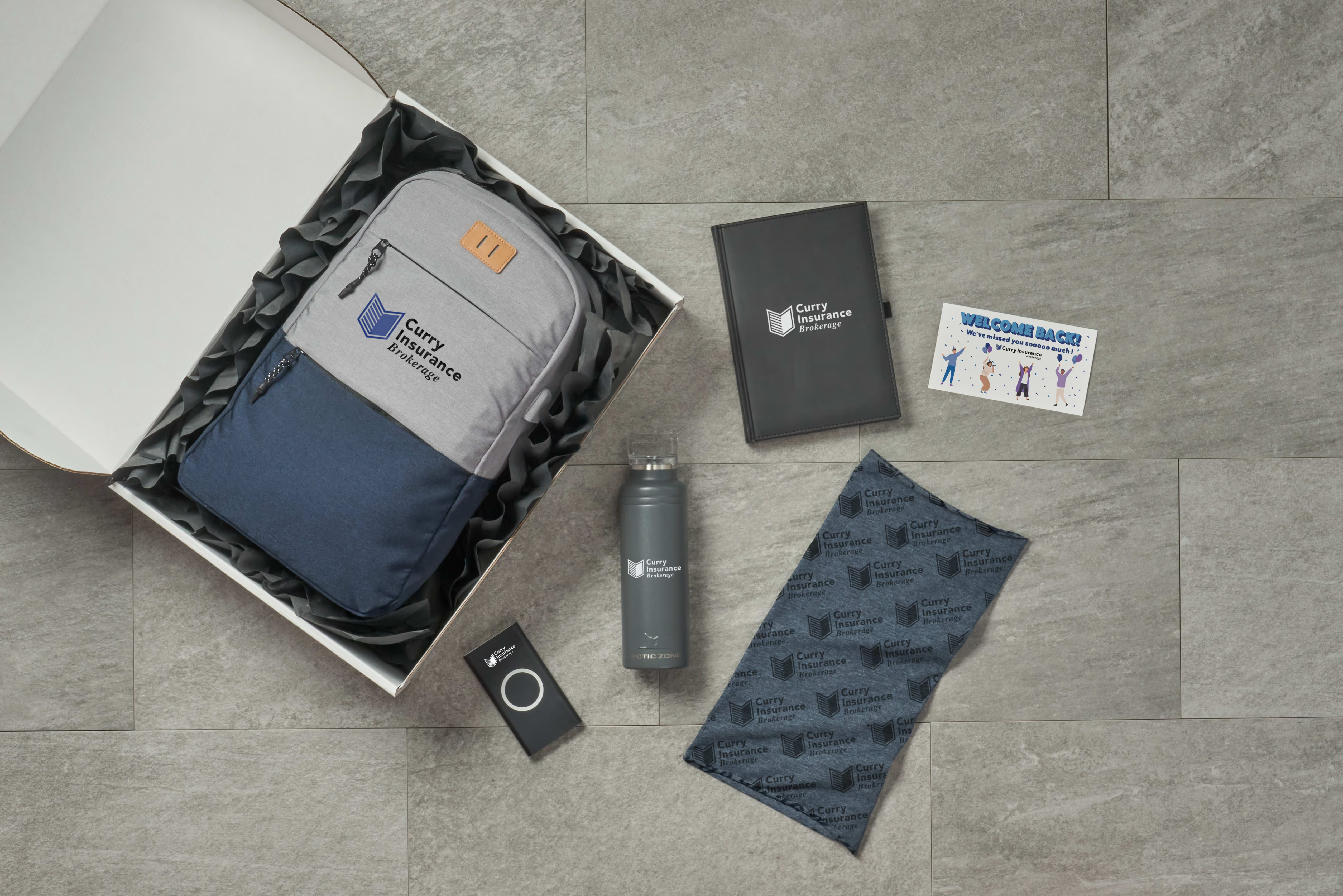

Does company swag affect culture?
Yes. Company swag affects culture because it tells employees what your company notices, what it values, and how much care it puts into shared experiences.
People teams already know culture is built through a hundred small signals, not one big speech from leadership. Swag is one of those signals. A welcome kit, a milestone gift, a conference item left on a desk, even the quality of a team shirt for volunteer day, all of it communicates something before anyone says a word.
If the item feels thoughtful, useful, and consistent with how your company presents itself elsewhere, employees read that as care. If it feels random, cheap, delayed, or clearly picked from whatever was easiest to order, they read that too. Swag is rarely the whole story, but it is often a very clear clue.
For HR and People Ops, that matters because culture is not just what leaders intend. It is what employees experience, repeatedly, in ordinary moments.
What does swag actually communicate to employees?
Swag communicates standards. It shows how seriously your company takes details, fairness, recognition, and brand consistency.
Employees are surprisingly good at reading intent from small choices. A high quality onboarding kit that arrives on time says, “We planned for your arrival.” A generic box with odd leftovers says, “We needed to send something.” Those are different emotional experiences, even if both technically count as company merch.
It also communicates who the company has in mind. If every item assumes the same climate, body type, work setup, or lifestyle, some employees will feel included and some will not. A culture signal is not just the object itself. It is the degree to which people can see themselves in the decision behind it.
Then there is consistency. If your company says it cares about design, sustainability, employee experience, or practical benefits, swag becomes a quick test of whether those values show up in real choices. People notice mismatches fast. A brand with polished external marketing and sloppy internal merch creates doubt. Not outrage, usually. Just doubt.
Can cheap swag hurt culture?
Yes, especially when it feels careless. Cheap swag does not always hurt culture, but low effort swag often does.
The issue is not price alone. A simple notebook can land well if it is well designed, useful, and given at the right moment. An expensive item can still fall flat if it feels off brand or disconnected from the occasion. Employees are not grading you on retail value. They are reacting to thoughtfulness.
Cheap swag becomes a problem when it signals disposability. The pen runs out in two days. The shirt fits almost no one. The mug has a logo slapped on it with no context. The “appreciation gift” arrives three weeks after employee appreciation day. That kind of merch can make recognition feel performative.
There is also a compounding effect. One forgettable item is just a forgettable item. Five years of random, inconsistent merch starts to feel like a pattern. People stop seeing swag as a culture touchpoint and start seeing it as clutter. Once that happens, even better future items have to work harder to earn attention.
That is why thoughtful restraint often beats volume. Fewer things, chosen well, say more than a steady flow of stuff nobody asked for.
Why does thoughtful swag make people feel more connected?
Thoughtful swag works because it turns abstract culture into something tangible. It gives employees a concrete moment that says, “We thought about your experience.”
Most culture efforts live in language. Mission, values, principles, manager toolkits, internal comms. Those matter. But physical objects have a different role. They show up in someone’s home office, on a trip, at a team event, or during a first week that already feels full of uncertainty. They stick around longer than a slide deck.
Good swag also helps mark transitions. A first day kit can make a remote employee feel expected. A parent leave gift can show warmth during a life change. A work anniversary item can signal that tenure is noticed, not just recorded in HRIS fields. In each case, the item is not the culture. It is proof that the culture showed up.
Shared identity plays a role too. When employees actually want to wear or use company merch, it creates a sense of belonging without forcing it. Nobody has to make a speech about pride. You can see it in what people choose to keep on their desk or wear on a flight to an offsite.
If you want ideas that connect merch to a more coherent brand experience, this piece on running branded merchandise like a brand channel is a useful read.
When does company swag feel authentic instead of forced?
Swag feels authentic when it matches the moment and the company behind it. It feels forced when it tries to substitute for culture instead of reflect it.
Employees can tell the difference between a gift that fits a real experience and a branded object sent to paper over a weak one. If morale is shaky, management trust is low, and workloads are unreasonable, a premium hoodie will not fix much. It might even annoy people. Swag cannot carry emotional weight that belongs elsewhere.
But when the underlying experience is solid, swag can reinforce it beautifully. Think of a welcome kit that mirrors the care of a well run onboarding process. Or an event item that ties into a team tradition people already like. Or a gift that marks a milestone managers are actually talking about in one on ones. In those cases, the object supports a real feeling instead of trying to manufacture one.
Authenticity also comes from taste. Not fancy taste. Human taste. Good colors, clean design, and items people might choose even without a logo. That is often the difference between “nice, thanks” and “I actually use this.”
For teams trying to tighten up visual consistency, Avail’s style guide offers a helpful example of how brand rules can lead to better choices instead of more rigid ones.
How should People Ops decide what swag says about the company?
Start by deciding the message first. The best swag programs are not built around products. They are built around moments, behaviors, and standards.
A useful question is: what should this item make an employee feel, and why now? If the answer is fuzzy, the item usually will be too. “We need something for new hires” is not yet a strategy. “We want new hires to feel expected, equipped, and included before day one” is much better. That leads to different decisions about timing, packaging, quality, and item selection.
It helps to look at swag the same way you look at other employee experience touchpoints. You would not send a poorly written welcome email and call it good enough. You would not host a recognition program with random criteria and hope people feel valued. Merch deserves the same level of intent because it lands in the same emotional territory.
People Ops should also ask who gets what, and when. Uneven distribution sends a message too. If one department gets polished kits and another gets leftovers, employees will build a story around that. Sometimes the story is accurate. Sometimes it is not. Either way, the signal is there.
If your team is working through operational issues as programs grow, this article on swag chaos does a good job describing why good intentions often break down in practice.
What are signs your swag is helping culture, not just filling closets?
You can usually tell by behavior. Helpful swag gets used, remembered, and tied to meaningful moments.
Employees wear it without being asked. New hires mention the package in their first week. Managers use milestone gifts as part of recognition, not as a replacement for it. Internal photos show the same visual language across offices and events. People ask where they can get another one when an item wears out. Those are strong signals that the merch meant something.
The opposite signs are easy to spot too. Boxes of old inventory in storage. Event leftovers nobody claims. Constant one off ordering with no shared standard. Employees joking about bad fit, poor quality, or mystery items from past campaigns. Those are not just operations problems. They are culture feedback.
One practical test: if you removed the logo, would the item still feel worth keeping? If not, it is probably doing more for procurement completion than for employee connection.
If this got you thinking about your own swag program, we write about this a lot on the Avail blog.
TLDR
- Yes, company swag affects culture because it signals care, standards, and consistency in everyday employee experiences.
- Cheap swag is not always the problem. Careless swag is. Employees react more to thoughtfulness and timing than raw price.
- Thoughtful merch helps culture when it supports real moments like onboarding, recognition, and shared identity.
- Swag feels forced when it tries to cover for weak employee experience instead of reflecting a strong one.
- People Ops should decide what an item needs to communicate before choosing products, because every merch choice tells a story.

%201.avif)