
Marketing teams are constantly balancing performance, cost, and sustainability when deciding where to invest their budget. A recent independent study gives marketers a clearer way to compare these factors across advertising channels, and the results are compelling for brands that use promotional products.
The research compared branded merchandise like logoed apparel and reusable drinkware against traditional advertising formats such as digital ads, TV, radio, print, and billboards. It measured two key things:
• Brand recall, or how well people remember a brand after exposure
• Carbon footprint per memorized impression using consistent lifecycle data
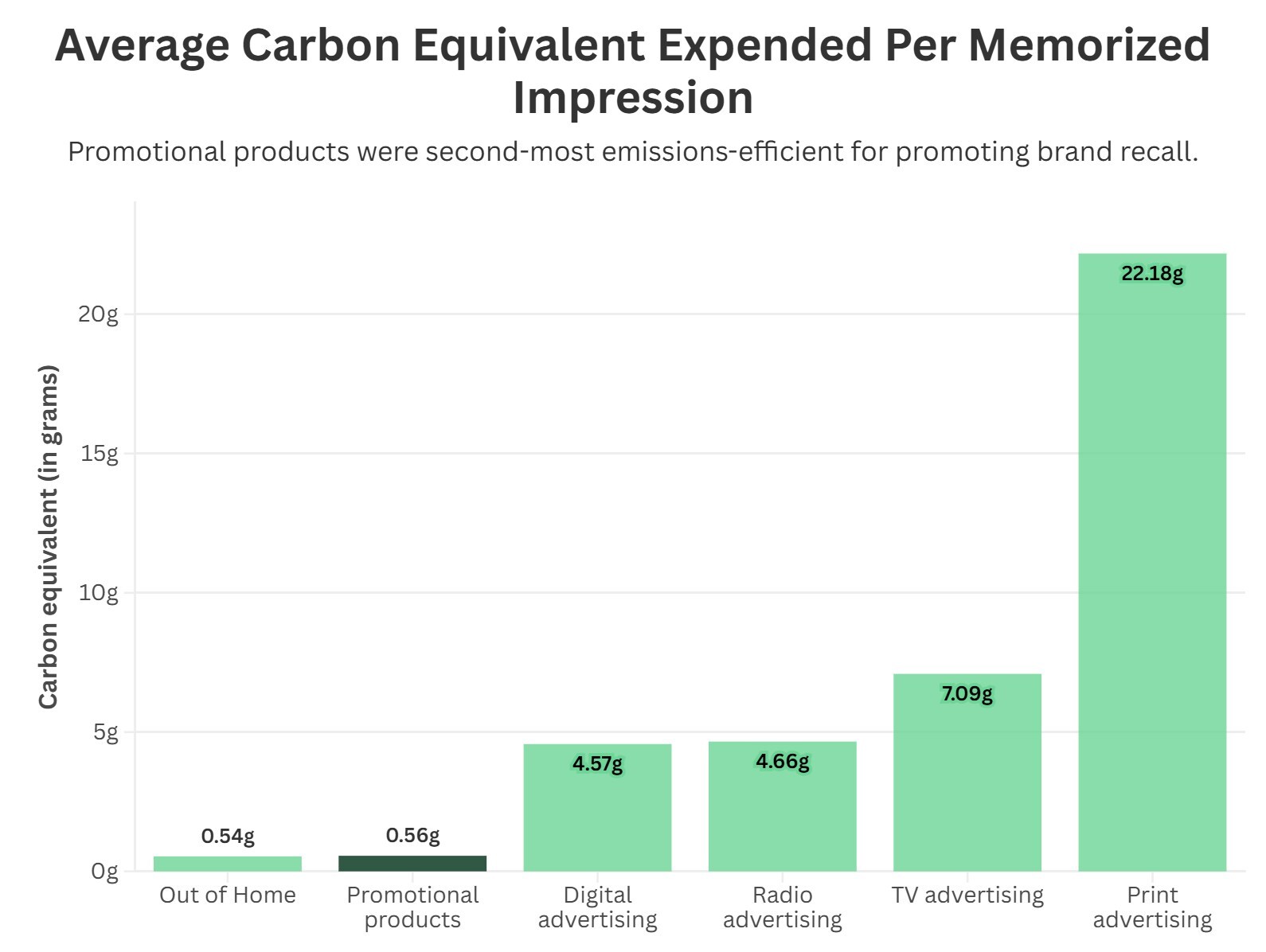
What the study found is worth paying attention to. Across both U.S. and European markets, branded promotional products ranked among the lowest in carbon impact per memorized impression, especially when compared with digital and broadcast advertising. In fact, promo products showed significantly lower emissions per impression than most other channels studied.
Why This Matters for Marketers
Most performance conversations focus on reach and engagement. But in a world where sustainability is becoming a strategic priority, understanding the environmental impact of your marketing channels matters just as much.
Here is what this research means in practical terms.
Repeated Exposure Creates Efficiency
Branded products often stay in someone’s home, car, or office for months or even years. A T shirt that gets worn weekly or a water bottle used every day continues generating impressions long after it is distributed.
Because those impressions happen without ongoing energy consumption like streaming or ad serving, the emissions are spread across repeated exposure. That drives down the carbon footprint per memorized impression over time.
Lower Carbon Impact Per Impression
The study evaluated full lifecycle impact, from production and distribution through usage and disposal. When emissions were compared against how well consumers remembered the brand, promotional products performed extremely well.
In other words, they created strong brand recall relative to their total carbon output.
Relevant in a Digital First World
Digital advertising continues to scale, and with that growth comes increased energy consumption across data centers, streaming infrastructure, and ad delivery systems.
Branded merchandise provides a tangible channel that builds brand affinity without requiring continuous energy use after distribution. For brands evaluating both performance and sustainability, that combination matters.
A Strategic Channel for Modern Brands
This research does not suggest promotional products have zero environmental impact. Every marketing channel carries some footprint. What it does provide is credible, data backed context.Promotional products deliver strong brand recall while maintaining a comparatively lower carbon impact per memorized impression than many traditional and digital channels.
For marketing teams looking to increase visibility while staying aligned with sustainability goals, that is a powerful combination. At Avail, we help brands build thoughtful, measurable merchandise programs that drive engagement while giving teams visibility into performance and impact.
If you are reevaluating your marketing mix with both effectiveness and sustainability in mind, this study offers a compelling reason to reconsider how branded merchandise fits into your strategy.
%201.avif)